AI can make our thinking far better and faster. I'm learning how to tell when it does.
The Computational Deliberation Lab is an independent research lab working on one problem: how to measure the quality of open-ended deliberation, where no answer key exists. I design evaluations, and I build my own deliberation systems to test them on, starting with business strategy and reaching toward science, philosophy and policy.
Technology has never decided where humanity goes. It is the accelerator, not the wheel: gunpowder gives us fireworks or war; nuclear technology gives us power plants or bombs. The technology does not choose. We do.
What determines where we go is the less glamorous process of figuring out what is true and what to do next: developing ideas, testing claims, considering alternatives, exposing assumptions, and correcting error. That is deliberation. It is how science advances, democracies govern, institutions learn, and teams find better paths forward.
Why now
I believe AI can make human deliberation far better and faster, and I'm experiencing that in my own work. The problems in front of us, in science, policy and society, are outrunning our ability to think them through, which makes this one of the most consequential things AI could do.
We have already seen what happens when a powerful communications technology is optimized for engagement rather than understanding. Social media expanded the scale of public conversation without giving that conversation the structure, independence, or rigor required to improve collective judgment.
AI presents a larger and faster version of the same fork in the road - at the moment our institutions can least afford to get it wrong. It can flood the world with answers, or it can help us build better processes for developing, challenging, and revising them.
The research question
The lab is not built on the narrower belief that AI simply needs to give more accurate answers. Accuracy matters, but the questions that shape science, policy, governance, and strategy rarely come with an answer key.
This makes deliberation essential not only for reasoning about the world, but for judging the outputs of the models themselves. As models become more capable, fluent, and persuasive, their answers may become harder - not easier - to evaluate. The better a model becomes at producing a compelling case, the more rigorously people must inspect its evidence, assumptions, alternatives, and failure modes. “Smarter” models do not eliminate the problem of judgment; they increase the cost of exercising it poorly.
Even perfectly calibrated models would not remove the need for people to weigh values, compare hypotheses, confront uncertainty, and exercise judgment together. The deeper question is:
How do you know a deliberation was good when its answer never comes back?
That is the measurement problem, and it sits at the center of the lab. The questions that matter most have no answer key, their outcomes arrive late and mixed with luck, and a fluent model can make weak reasoning look strong. Without a way to tell good deliberation from bad, nobody, human or machine, can reliably get better at it.
The aim is not to build an oracle. It is to strengthen judgment by externalizing the reasoning: mapping competing claims and hypotheses, exposing hidden assumptions, generating alternatives, tracing what a conclusion depends on, and attacking weak ideas before reality does.
This is refutation-first work. Facts should face evidence. Claims should face counterarguments. Strategies should face better alternatives. The system attacks the thinking, not the person - and the human remains the author of the decision.
What the lab is building
Two things, one in service of the other. The core work is evaluation design: ways to judge the quality of open-ended reasoning, by people or machines, before the outcome comes back. The second is a set of deliberation systems I build as testbeds, including a deliberation calculator - a machine that maps an open-ended problem, tests what the map contains and shows what survives. Running them on real decisions is how I learn their limits and what's possible.
In practice, that means experimenting with ways to:
- Decompose complex questions into testable claims and hypotheses.
- Distinguish facts, assumptions, uncertainties, and values.
- Map competing explanations and strategic alternatives.
- Sustain independent criticism beyond the limits of one person or group.
- Make reasoning visible enough to inspect, revise, and reuse.
- Preserve human judgment while multiplying the rigor behind it.
The first application is business strategy. Founders bring a company-defining decision, and investors bring one live investment before the money moves: I decompose it, expose the assumptions, map the bets, generate alternatives and try to break the thinking before the market does. They remain the authors of the decision; the systems multiply the rigor behind it.
But the research question is broader. The same methods may matter wherever people need to discover, understand, evaluate, or decide - from science and journalism to policy, governance, and institutional strategy.
A research program, not a finished answer
I do not yet know what AI-scale deliberation looks like when it works in the world, or how to keep it honest as it grows beyond a few people in a room. Nobody does. This is not a solved problem being packaged as certainty; it is an open research program and a bet worth testing seriously.
What you’ll find here is the lab notebook: working systems, experiments, methods, findings, failures, and revisions shared while the work is still alive. The standard is not whether an idea sounds impressive. It is whether it survives contact with evidence, criticism, alternatives, and use.
About me
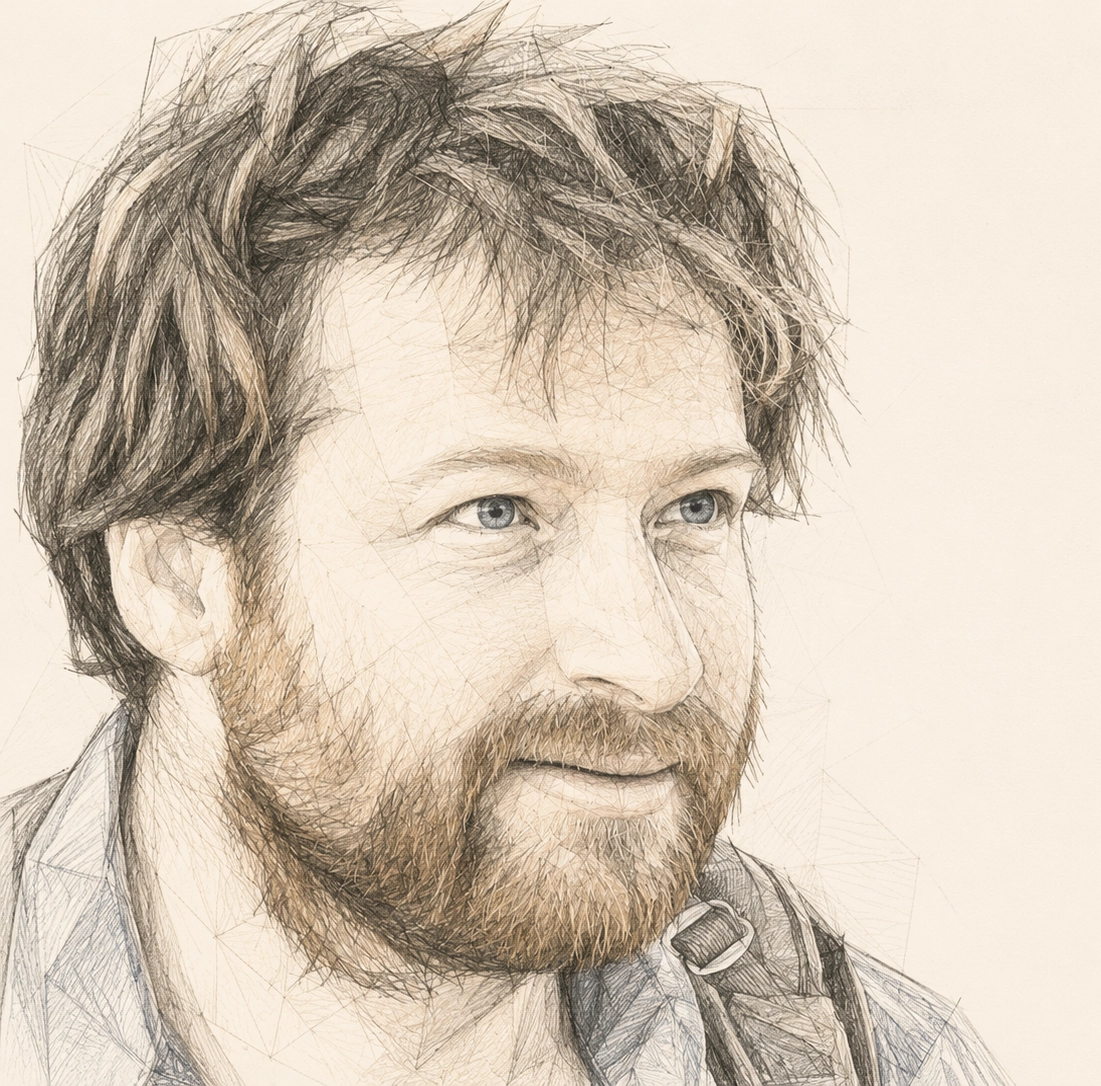
I’ve been curious about how judgment works, mechanically, since studying cognitive science, neural networks, and computational neurobiology - long before I had a lab in which to test any of it. I felt the stakes of that question as CEO of Joyned, a startup that took me through the full company journey and taught me firsthand how hard consequential decisions are, and how badly the people making them need better help than “think harder.”
Before that, I spent years as a mission control officer, trained for the conditions this problem lives in: high stakes, incomplete information, real-time pressure, and a decision that has to be made anyway.
These days, it is advisory work, raising two kids in Jerusalem, and this lab - the part I cannot stop thinking about.
Follow along
New builds, findings, and occasional dead ends land here as they happen. Subscribe below if you want them in your inbox - and if any of this resonates, I would rather hear from you than talk past you.
Subscribe to new essays →
To bring a decision to the lab, book a 30-minute intro. Anything else: michael@computational-deliberation.com.